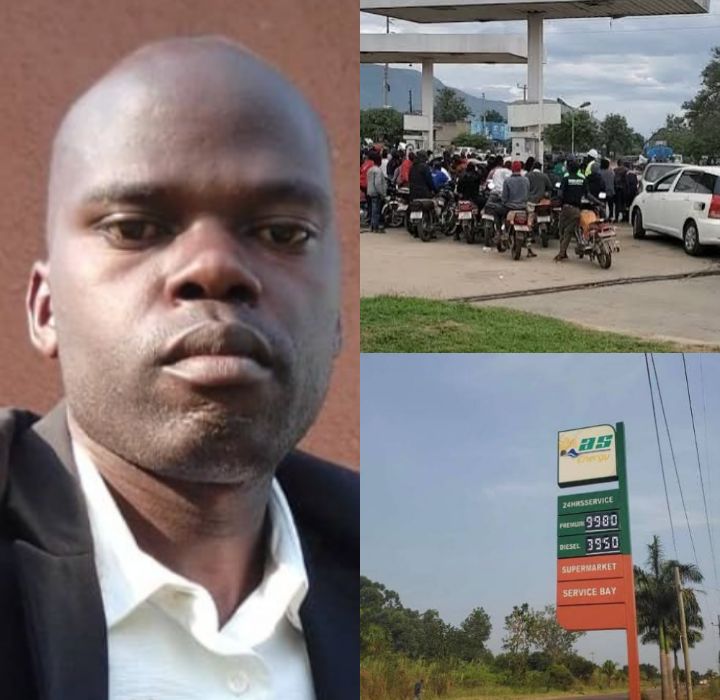
The country is at a crossroads, with rising fuel prices leaving many anxious. Fuel remains a key driver of the economy, and any price shift shakes the entire system. Commodity prices rise, consumer purchasing power drops, manufacturing slows, investment stalls, and joblessness looms.
But is the fuel scarcity real?
Several factors are at play.

First, fuel in neighboring countries has recently been slightly more expensive than in Uganda. This has pushed consumers from across the border to buy here, creating higher demand. In a laissez-faire economy where demand and supply set prices, any unplanned demand can disrupt market flow.
Second, with uncertainty over when the Iran-Israel/U.S. conflict will end, speculation remains high. Business in the Middle East is disrupted, leaving fuel sellers with no option but to keep speculating.
Uganda’s geography as a landlocked country also puts it at a disadvantage, reliant on neighbors with coastal access. Insurgency in Kenya, for example, has often disrupted supply.
Beyond that, Uganda’s preparedness for such uncertainties is lacking. The absence of reliable fuel reserves keeps the country vulnerable to shocks.
Yet the role of fuel traders deserves scrutiny. Many dealers exploit these weaknesses to over-speculate, exaggerate shortages, and overcharge Ugandans in pursuit of higher profits. As long as the fuel business remains dominated by private investors, it will stay vulnerable to such practices.
It is time for government to take greater control of the fuel sector. Building adequate reserves should not be taken lightly.
We also need multiple routes to access the coast. Relying mainly on the Mombasa–Kenya–Busia corridor is like keeping all our eggs in one basket.
Most importantly, this is the time to finalize oil exploration in the Albertine region. We should now focus on how to use our own oil.
Author: Jonathan Agumeneitwe,
(A proffessional Teacher, Journalist and Politician).
*Excerpt:*