KANUNGU DISTRICT
Kanungu District has intensified its preparedness against Ebola and other infectious disease threats after successfully training more than 1,400 community-based health workers and local leaders in risk communication, disease surveillance and community reporting.
The week-long training campaign, supported by the Malaria Consortium and UNICEF, was designed to strengthen early detection and rapid reporting of disease signals, particularly in communities along Uganda’s western border where public health authorities continue to maintain heightened epidemic surveillance.

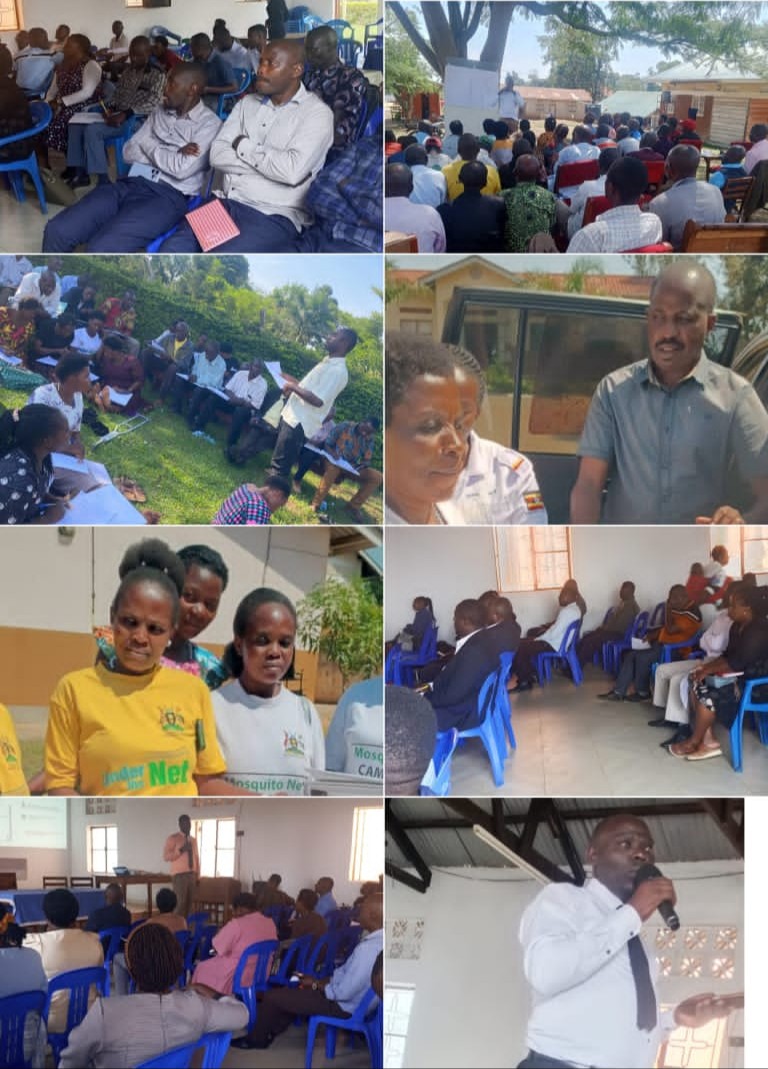
The programme officially began on Wednesday, August 12, 2026, at the Kanungu Catholic Social Centre, where 87 health workers and supervisors participated in a comprehensive Training of Trainers (TOT) session focusing on Risk Communication and Community-Based Surveillance.
Following the initial training, the trained health workers and supervisors moved to sub-counties and health facilities on Thursday and Friday, August 13–14, to cascade the knowledge to community-level structures.
By the conclusion of the exercise, 1,048 Village Health Team (VHT) members had been oriented. The number represents two VHT members from each of Kanungu District’s 524 villages.
An additional 306 parish influencers were trained, comprising three representatives from each of the district’s 102 parishes. The group included parish chiefs, LC2 chairpersons and local schoolteachers, who are expected to play an important role in mobilising communities and communicating timely health information.
Speaking on behalf of the District Health Officer, Kato Besisira, Assistant District Health Officer (ADHO), described the training as timely and long overdue.
He emphasized that providing VHTs with accurate and practical information about Ebola and other epidemic threats is essential for ensuring early identification, reporting and containment of suspected cases before they escalate into wider community outbreaks.
Besisira also commended the Malaria Consortium for providing timely support towards strengthening the district’s surveillance and response capacity.
Nsima Simon, the District Health Educator, noted that VHTs have historically faced gaps in risk communication training. He described the current programme as an important turning point and called for continuous community orientations to ensure that local leaders and community structures remain informed and coordinated on matters of public health.
The training also placed strong emphasis on practical skills and the use of digital technology to improve disease surveillance.
Karungi Honest, Assistant District Health Officer for Maternal and Child Health, urged health workers to ensure that VHTs become proficient in using the 6767 mobile reporting system, through which surveillance information can be submitted in real time.
The system is expected to help health authorities receive timely information on suspected disease signals and other public health concerns emerging at household level.
Meanwhile, Fred Ouma, Senior Environmental Health Officer (SEHO), urged health workers and VHTs to incorporate sanitation monitoring into their routine community activities.
He encouraged them to conduct thorough household visits, document their observations and submit routine reports so that health authorities can identify emerging risks and respond before they develop into larger public health emergencies.
The initiative comes with financial and operational support intended to sustain community surveillance beyond the training period.
Isaac Kimera, speaking on behalf of the Malaria Consortium and UNICEF, assured participants that funding had been secured to support both the training programme and a three-month follow-up period.
Under the new surveillance framework, each VHT will be expected to visit approximately 25 households every month, where they will monitor health alerts, identify possible disease signals and keep track of non-traumatic or sudden deaths.
To promote accountability and motivate consistent reporting, the Malaria Consortium will provide a monthly stipend of Shs100,000 to VHTs and supervisors who successfully complete and submit their monthly reports through the 6767 system.
The training concluded on Friday, August 14, 2026, with practical community-level reporting exercises aimed at ensuring that participants could translate the knowledge acquired during the training into effective surveillance activities in their respective communities.
District authorities say the strengthened community surveillance network will provide an important frontline defence against infectious disease outbreaks by improving the speed at which unusual health events are identified, reported and acted upon.
The programme also underscores the growing importance of community participation, digital reporting and coordinated local leadership in Uganda’s efforts to strengthen epidemic preparedness and protect communities from emerging health threats.
END