

KAPEEKA — Uganda’s capital does not have a garbage truck problem. It has a land problem.
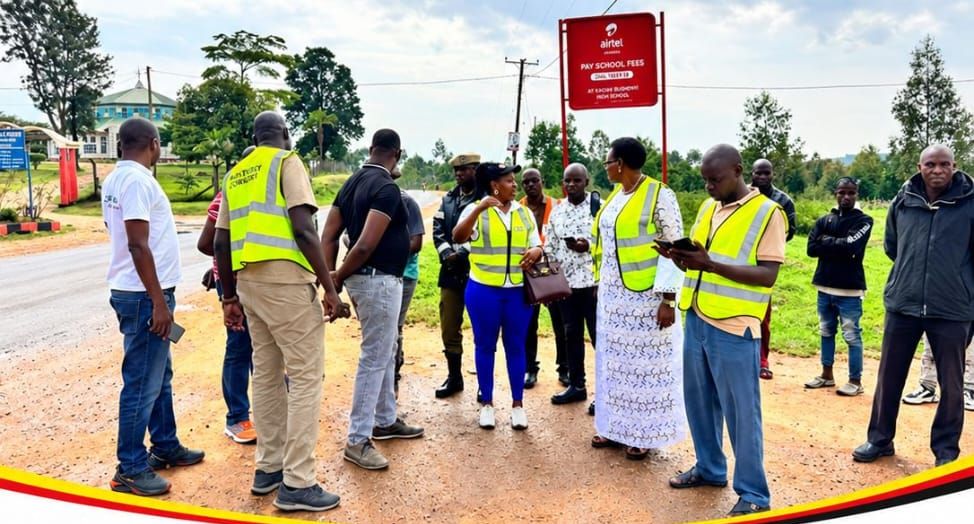
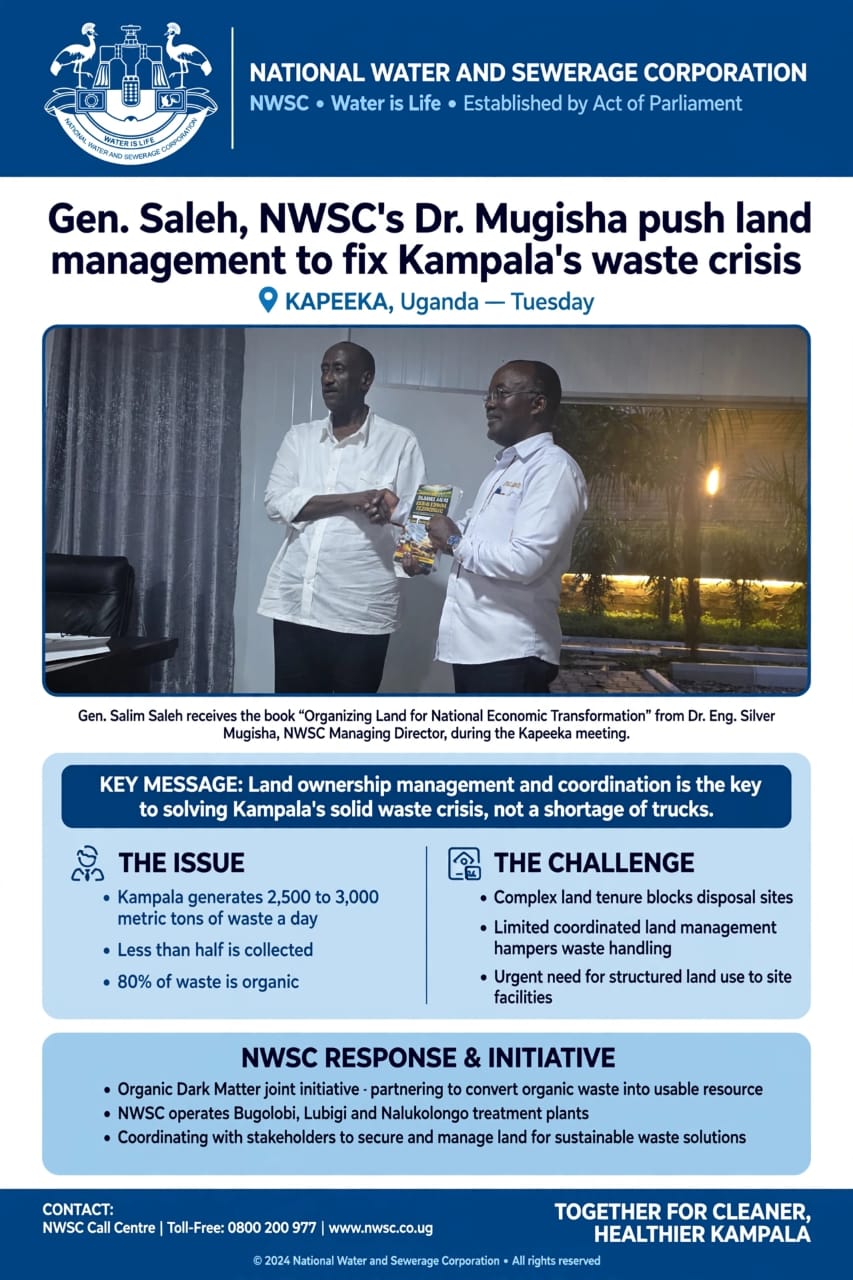
That was the conclusion reached on Tuesday in Kapeeka, Nakaseke District, where Gen. Salim Saleh, Senior Presidential Adviser on Operation Wealth Creation, and Dr. Eng. Silver Mugisha, Managing Director of the National Water and Sewerage Corporation – NWSC, met to review the “Organic Dark Matter” sanitation drive.
Kampala produces between _2,500 and 3,000 metric tons of waste daily_, but less than half of it is collected. Officials say _80% of it is organic_ — heavy and wet — and it requires land for treatment, composting and proper disposal.

The meeting concluded that Uganda’s complex land tenure system and poor coordination among institutions are blocking the establishment of waste facilities. Without clear ownership and designated sites, efforts to expand dumping grounds and treatment plants keep failing.
_“We don’t lack land. We lack organization of land,”_ Gen. Saleh said. He described land as “dead capital” in his new book, _Organizing Land for National Economic Transformation_, which he presented to Dr. Mugisha during the meeting.
Dr. Mugisha agreed and pledged stronger cooperation between NWSC, KCCA, NEMA and development partners. NWSC currently runs the Bugolobi, Lubigi and Nalukolongo treatment plants, plus the Kinawataka pre-treatment facility. However, with sewer lines covering only a small part of Kampala, most residents still depend on pit latrines and septic tanks.
The Kapeeka meeting was held at the China-Uganda Liao Shen Industrial Park, which Gen. Saleh cited as proof that proper land planning attracts industry. NWSC has also upgraded the Kapeeka water supply from River Mayanja to serve the park and surrounding communities.
Also present were Hon. Ronald Kibuule, former Minister of State for Water; Dr. Akankwasa Barirega, Executive Director of NEMA; Ambassador Phillip Idro; and Dr. Zalwango of KCCA.
With Kampala’s Kiteezi/Buyala dumpsite repeatedly overwhelmed, both leaders said the path forward is clear: _secure land, harmonize institutions, and plan together_ — or the city will continue to drown in waste.
_By: Moses Bwengye (Panadol ya’ Bushenyi)_