
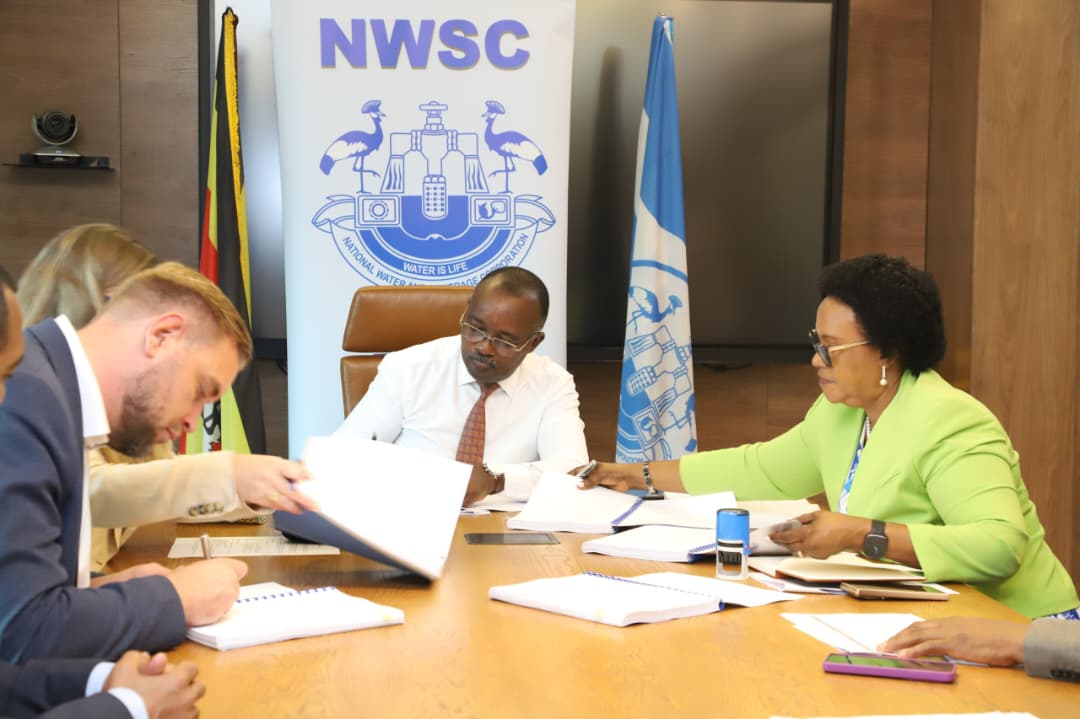
Kampala,Uganda – National Water and Sewerage Corporation’s top engineers used a live UBC TV appearance this morning to reassure a frustrated public, outlining Uganda’s roadmap to universal water access while addressing persistent billing concerns.
Appearing on _Good Morning Uganda_, Managing Director _Dr. Eng. Silver Mugisha_ and Kampala Water General Manager _Eng. Mahmood Lutaaya_ answered questions on service delivery, debt, and infrastructure. Host Jullie F Nantaba Musisi guided the discussion themed _“Water for All: Infrastructure Development for Service Delivery – Opportunities and Challenges.”_
*Growth and 2027 targets*

Dr. Mugisha highlighted NWSC’s expansion since August 2013: from 23 towns with 296,000 connections to more than 270 towns with over 950,000 connections today. The _Corporate Plan 2024-2027_ targets “Water and Sanitation for All,” with 1.135 million connections by 2027.
*Key projects underway*
1. *New treatment plants* to increase supply for fast-growing towns, including the expansion of Katosi Water Works and new plants planned for Gulu and Mbarara.
2. *Pipeline replacement* to reduce non-revenue water. NWSC is targeting leaking colonial-era pipes in Kampala’s CBD and Naguru, where losses previously reached 35%.
3. *Donor-backed extensions* to unserved parishes, including the AFD-funded project extending mains to 120 villages in Wakiso and Mukono, and the World Bank–backed SCAP 100 towns program.
*Financing hurdle*
“We are owed UGX 355 billion, and the bulk is by government agencies,” Dr. Mugisha said. “We invoice them, but they do not pay, yet we must still pay VAT on that money. It cripples our cash flow and slows projects.”
*Billing concerns*
Eng. Lutaaya acknowledged that Kampala Water serves over 60% of NWSC’s customers and receives the largest share of billing queries. “Some billing issues are real, and we do not run away from them,” he said. “Some are caused by leaks after the meter, others by estimated readings, and yes, some by staff misconduct.”
He said the NWSC Customer Protection Unit now handles disputes through dedicated hotlines, WhatsApp, and an online portal that issues tracking numbers. “Log your issue, get a ticket number, and we will give you feedback. If our staff are found guilty, they face disciplinary or legal action. We have dismissed staff before.”
Lutaaya also highlighted the _“Come We Talk”_ initiative for customers disconnected for more than three months. “If you are off supply due to arrears, come and we shall agree on a flexible payment plan. We want you back on water.”
*Infrastructure and reliability*
Both engineers said Kampala’s biggest technical challenge is aging infrastructure that cannot meet rising demand. To reduce downtime, NWSC has installed SCADA monitoring systems and introduced zonal metering in several divisions, which Lutaaya said have already improved supply reliability in key areas.
*Public appeal*
Dr. Mugisha appealed directly to the public: “Protect the infrastructure. Report vandalism. Report leaks. And pay your bill. Every shilling we collect goes into laying the next pipe.”
In closing, he urged leaders to stop politicizing water services: “Water is life. If we all play our part, Uganda will have universal access in this generation.”

As a tech enthusiast following the SCADA implementation in Kampala, I’m curious about the integration of these systems with local payment gateways like Mercado Pago to reduce the billing disputes mentioned. When looking at the security protocols for financial verification and KYC standards in emerging markets, I noticed some interesting technical benchmarks on https://guiadecasinozeusargentina.com regarding transaction encryption and operator transparency—how does the NWSC’s new online portal compare to these international digital security standards to ensure that customer data and payments remain fully protected from the staff misconduct issues Eng. Lutaaya pointed out?